Reading a Weaving Draft: A Beginner’s Guide to Threading and Treadling Diagrams
October 29, 2026 - Weaving
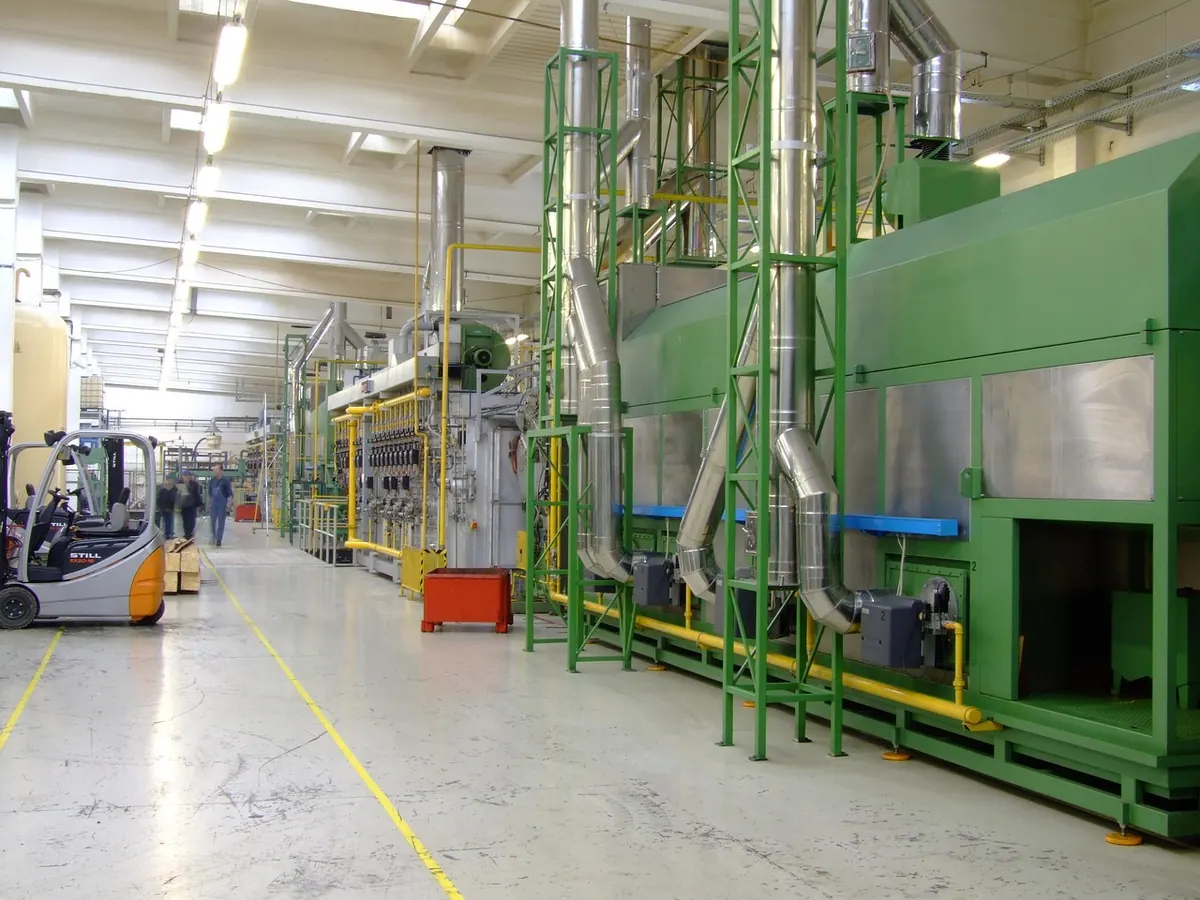
The carding machine is about the size of a small car and sounds like weather. Behind it, a spinning frame turns a soft web into yarn fine enough to pass through a heddle, and somewhere in between sits a table covered in fleece that has been sorted into three piles, one of which will not be used. A small wool mill is not a factory scaled down. It is a place where someone looks hard at your wool and decides what it can honestly become.
Most of that deciding happens quietly, in steps that never make it into the finished cloth. Here is what actually occurs between the sheep and the loom.
Before anything is washed, the fleece is spread on a mesh table and skirted — the edges and the dirty parts pulled away and set aside. Belly wool, tags, the coarse britch wool from the back legs, and any second cuts from the shears. That last one matters more than people expect. A second cut is a short fibre, and short fibres are what turn into neps in the carder and pills on a finished blanket two winters later.
The person skirting is also reading the fleece. How long is the staple? Is the crimp tight and even, or loose and wavy? Does a lock break when you hold it at both ends and tug? A fleece that snaps is tender, often from illness or stress during growth, and no amount of careful processing will make it into a durable warp.
Sorting within a single fleece is normal too. The neck wool is usually finer than the britch, and a mill may keep them apart rather than blend everything into an average. If you send three fleeces, expect three decisions, not one.
Raw wool carries a great deal of lanolin, sweat salts, and dust, and the grease has to come out before the fibre can be opened. Small mills generally scour in batches: several baths of hot water and a mild detergent, a couple of rinses, then drying.
The tricky part is that clean wool plus hot water plus agitation equals felt. So the fibre is handled gently, water temperatures are kept consistent between baths — a sudden cold rinse can shock grease back onto the fibre — and nobody stirs. Some mills scour in a modified washer with the agitator removed; others use a purpose-built bath with a gentle circulation pump. Either way, the goal is the same: lift the grease off without moving the fibres against each other.
This is also where a weaver learns the yield. A greasy fleece loses a noticeable share of its weight to grease, dirt, and vegetable matter, so what goes into the carder is considerably lighter than what arrived. Plan your project from the clean weight, not the fleece weight.
Scoured wool arrives at the carder in clumps. Picking, whether by hand or by a machine with toothed rollers, loosens those clumps first, and it is the last easy moment to pull out burrs. Burrs that survive picking will get beaten out during carding, but the hard ones can dull or damage the card clothing — the toothed cloth that does the actual work — so a few minutes of picking saves real money.
The carder then separates individual fibres and lays them into a loose, airy web, which is either taken off as a batt or condensed into a soft rope called roving or sliver. Blending happens here if you have asked for one: 70/30 with a little alpaca for drape, or a handful of coloured fleece through a white batch for a heathered yarn. The carder blends honestly but it cannot fix everything:
How the fibre is fed matters as much as the machine. Thin, even feeding produces a consistent batt; dumping a handful in at once produces thick and thin patches that follow the yarn all the way to the loom.
Now the fibre has to be drawn out and held together with twist. Small mills spin two broad ways, and the choice usually follows the wool rather than the other way around.
Woollen spinning works from carded fibre with fibres crossing in all directions. The result is airy, warm, slightly fuzzy, and forgiving — good for blankets, weft, and anything that wants loft. Worsted spinning uses combed fibre with the long hairs aligned and the short ones removed, producing a smooth, strong, dense yarn that holds up as warp. Many small mills only have the equipment for one of these, which is worth asking about before you fall in love with a project plan.
A good mill spins a small sample first and checks it properly: wraps per inch around a ruler, a look at the twist under magnification, a tug to see how it behaves. Wraps per inch is a rough but useful guide, and it is the number a weaver needs to work out sett. Two yarns of the same weight can behave very differently if one is softly twisted and the other firm.
Expect this stage to be the slowest. A spinning frame running small batches spends much of its time being threaded, adjusted, and cleaned between runs, and a mill that rushes the sampling is a mill you will argue with later.
Singles straight off the frame are lively and unbalanced. Plying two or three of them together in the opposite direction calms the twist and adds strength and roundness. The plied yarn is then wound into skeins, washed to set the twist, and dried. How it is dried changes the hand slightly; hanging under light tension gives a straighter, crisper yarn, while drying loose keeps more of the softness.
Finally comes put-up, the form the yarn leaves in. Cones are convenient for warp and for anyone winding bobbins; skeins suit dyers and anyone who wants to inspect the yarn properly. If you are weaving, say so — a mill that knows the yarn is going on a loom may wind it a little more firmly and check for thin spots.
The processing itself is only half of a good result. The other half is the conversation before the wool is posted. A short list to run through:
The cloth you finally weave carries all of it — the sorting decisions, the temperature of the wash water, the evenness of the feed into the carder. None of it shows. All of it is there.
Photo: marcin049 / Pixabay
A weaving draft is four connected diagrams, not a code. Here is how threading, tie-up, treadling and drawdown...
A practical comparison of twisted fringe, hemming and wet-finishing for handwoven scarves, judged on time,...
Copyright © 2026 Telaio Sottovoce. All Right Reserved.