Reading a Weaving Draft: A Beginner’s Guide to Threading and Treadling Diagrams
October 29, 2026 - Weaving

Somewhere in a Piedmontese valley, a carding machine older than your grandmother is still turning fleece into sliver. In a backstreet workshop in Prato, a weaver is threading a loom that has been reworked three times. Italy’s small mills and studios are not museums; they are working places, often family-run, frequently noisy, and almost always worth the detour. The difference between a rushed visit and a good one comes down to preparation: knowing how to ask, what to wear, where to stand, and which questions actually start a conversation.
Most small Italian wool mills do not run public tours. They sell yarn and cloth wholesale, they are busy, and a stranger at the gate is a distraction. What works is a short, polite request sent well in advance — two to four weeks is sensible, longer if you want to see a specific machine or process.
Write in Italian if you can, or in simple English with an Italian version beneath it. Keep it to a few lines: who you are, why you are interested, how many people, how long you need, and when you would like to come. Something like “Sono un appassionato di tessitura e vorrei chiedere se è possibile visitare il laboratorio” does more than a paragraph of flattery. Offer to come at their convenience, and accept “no” gracefully — some workshops genuinely cannot host visitors for insurance or safety reasons.
Two practical notes about timing. Many Italian businesses close for lunch, and small family workshops often shut entirely for several weeks in August. Late spring and early autumn are the friendliest windows: the weather is mild, the roads into the valleys are clear, and work is in full swing.
Italian textile production grew up around water. Look for a mill beside a stream or canal, a stone structure with unusually tall windows, and a roof that suggests heavy machinery underneath. The old fulling mills — gualchiere — used water-driven hammers to thicken cloth, and some survive in the same buildings where modern carding and spinning happen.
Regions carry their own signatures, and knowing them helps you ask better questions. Biella and the valleys around it are the historic heart of Italian wool; Prato built its reputation on regenerated wool from recovered rags; Como is associated with silk and fine printing. None of this is a rule, but it gives you a frame for what you are seeing.
Also read the small print on the gate: intercom buttons, delivery entrances, a notice about orario continuato or a midday closure. Arriving at the right door, on time, sets the tone for everything after.
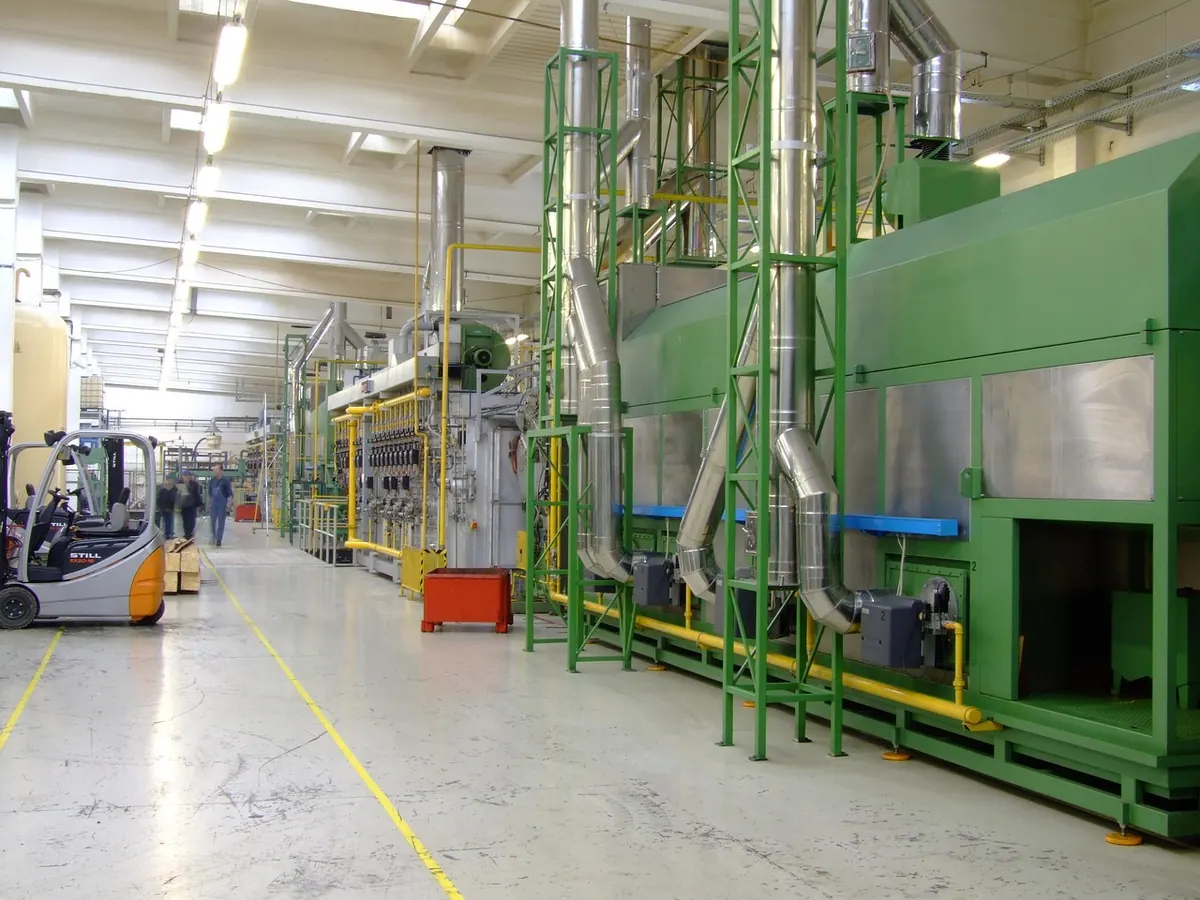
A working mill is a factory with a family’s name on it. You will be walking through someone’s daily routine, so make yourself small and useful rather than large and curious.
Generic questions produce generic answers. Ask about process and constraint, and people light up.
That last question is the most revealing one you can ask anywhere. The answer tells you where the real craft sits.
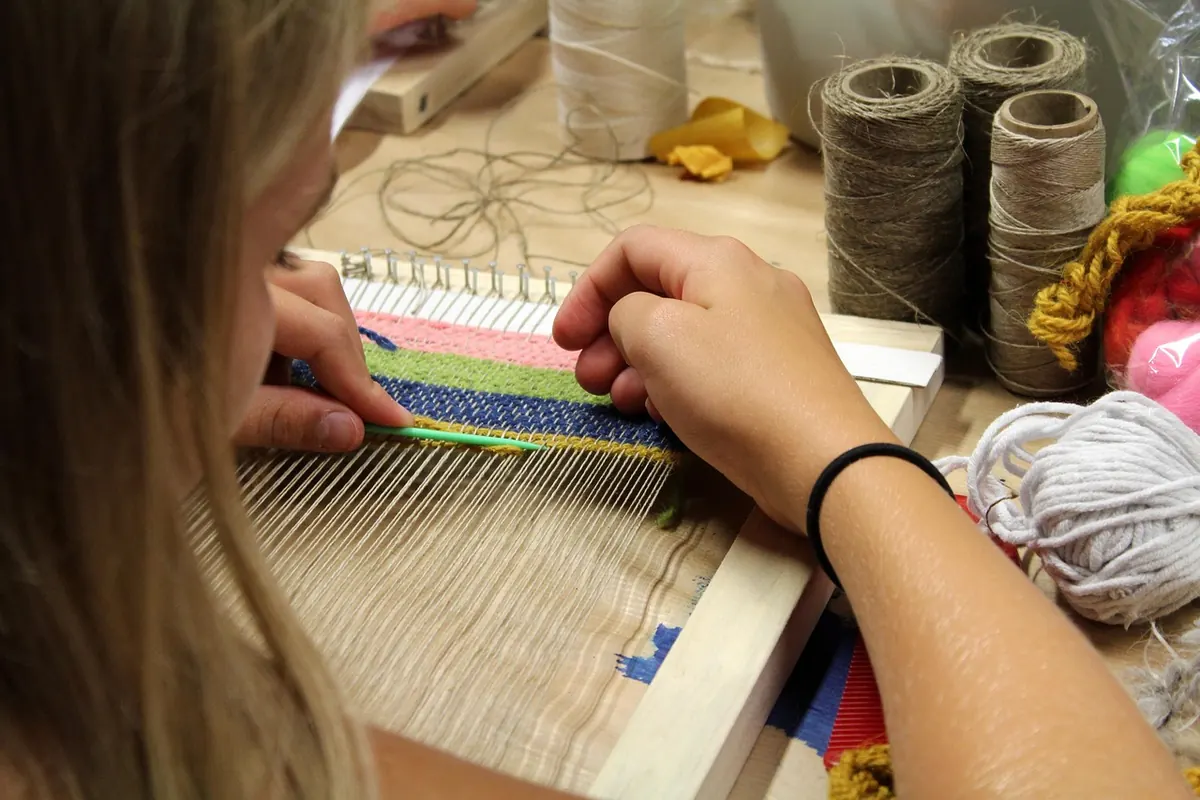
Stand at a respectful distance and look at the edges first. A clean selvedge, with even tension and no pulled threads, says more about a weaver than any brochure. Follow the warp from the back beam to the cloth beam and notice whether the threads are evenly spaced; a dense sett in a fine yarn and an open sett in a thick one are different intentions, not different quality.
Ask to see samples if they are offered. Sample books — libri campionario — are where a studio’s history is stored, often decades of them, with handwritten notes about yarn and finishing. Handle them with clean, dry hands and turn pages from the corner.
Buying directly is one of the pleasures of this kind of visit, but come prepared for the practical side. Ask about shipping before you fall in love with a bolt of cloth, and confirm whether prices include Italian sales tax, since exported goods may be handled differently. Card readers are common but not universal in small workshops; ask rather than assume.
If you are buying yarn for a specific project, be honest about quantities and ask whether the lot can be repeated. Some mills can, some cannot, and knowing early saves disappointment six months later. For anything involving customs or import rules, check your own country’s requirements — that part is on you, not the mill.
The thank-you note matters more than it sounds. Small Italian textile businesses run on relationships, and a visitor who arrives prepared, asks thoughtful questions, and writes back is remembered. That is how a first tour becomes a standing invitation — and how a stack of sample cards on your shelf turns into years of correspondence with the people who made them.
Photo: JonHil / Pixabay

A weaving draft is four connected diagrams, not a code. Here is how threading, tie-up, treadling and drawdown...
A practical comparison of twisted fringe, hemming and wet-finishing for handwoven scarves, judged on time,...
Copyright © 2026 Telaio Sottovoce. All Right Reserved.